Partners in Parenting Kids

Partners in Parenting Kids (PiP Kids) is an award winning, evidence-based online program designed to support parents of primary school-aged children (aged 5-11 years) to reduce their child’s risk of anxiety and/or depression. The program aims to equip parents with strategies to improve their parenting confidence and support their child’s mental health. The program involves interactive online modules.

Who is this program for?

This program is not recommended as a sole source of support. If you are concerned about your child’s mental health, we encourage you to seek professional support from a mental health professional for your child alongside completing this program.

If you feel like you are experiencing challenges with your own mental health, we encourage you to continue seeking support from your support network and/or a mental health professional alongside completing this program.

Target
Successful Delivery
What’s in store for you?

PiP Kids aims to empower you to support your child’s mental health. The program includes practical, evidence-based and expert-endorsed strategies designed to build your skills and confidence.

Feedback
Get personalised feedback

Your journey starts with an online assessment. This allows us to give you personalised feedback about your parenting. Based on this feedback, we'll recommend specific modules for you.

Access up to 14 interactive online modules

We can recommend you modules to complete, but you can choose extra modules you want to do.

Making children feel loved, safe and secure is essential to their overall wellbeing. The first step towards this is showing affection and acceptance. In this module we will take a closer look at different ways you can demonstrate affection and acceptance in a warm and consistent way.

Open communication with your child helps them feel more comfortable to talk to you about what is going on in their lives. This module provides tips on how to encourage open communication and make the time to connect with your child.

Being involved in your child's life shows them that you care. It also helps you to see any issues they may be facing and to observe their successes. In this module you will learn how to be appropriately involved in your child's life without becoming over-involved.

Encouraging children to be independent in a developmentally-appropriate way helps them to build self confidence. This module will help you to learn how to strike the right balance between being involved in your child's life and encouraging autonomy.

Supportive relationships allow children to develop loving bonds with other people. Children who have supportive relationships are less likely to develop depression or anxiety problems. This module will help you to identify, encourage and support such relationships for your child.

Establishing clear family rules can help guide children's behaviour by setting out what behaviours are and are not acceptable in your family. This module will help you to understand how to work with your child to set boundaries and consequences that everyone can follow and what you can do when things sometimes don't go to plan.

Setting up healthy habits around diet, physical activity, sleep and screen time early on can help these habits to be maintained as children grow. This module will provide strategies to encourage healthy habits for your child and improve the mental and physical health of your whole family.

Parents play an important role in helping their children learn to manage conflict in a healthy way. This module will provide strategies for how to manage conflict at home, to create a safe and supportive environment for your child.

Setting realistic goals helps children learn the importance of working hard to achieve something, even when it's tough. This module will show you how to encourage your child to set goals they can actually reach and how to handle disappointment when things don't go as planned. We'll also talk about ways you can help your child become more independent in solving problems.

Everyone feels anxious at times. Sometimes when anxiety becomes overwhelming for a child they may need some help to manage it so that it doesn't get out of control. This module will help you to identify if your child is feeling anxious and how you can help them manage this anxiety.

Children who understand their emotions are more likely to be emotionally healthy. This module will provide strategies you can use to help your child identify and express their emotions in a healthy way and to develop helpful thinking patterns.

All children experience ups and downs as part of growing up. Sometimes however, the downs can develop into depression and anxiety disorders and it is important for parents to be able to identify if this is the case. This module will help you to understand what to look out for and when it's time to seek help.

Many parents wonder whether they should discuss their mental health challenges with their child and how they might prepare for these conversations. This module discusses the benefits of talking with your child about your mental health and provides tips to help you prepare for these conversations.

The idea of starting conversations with your child about your mental health challenges can be daunting. Children may have questions or be completely quiet and it can be hard to know what to say. This module will provide you with tools for having these conversations with your child.

Responsive
Fits your lifestyle
  • Only 15-25 minutes per module
  • Complete the program at your own pace
  • Entirely online
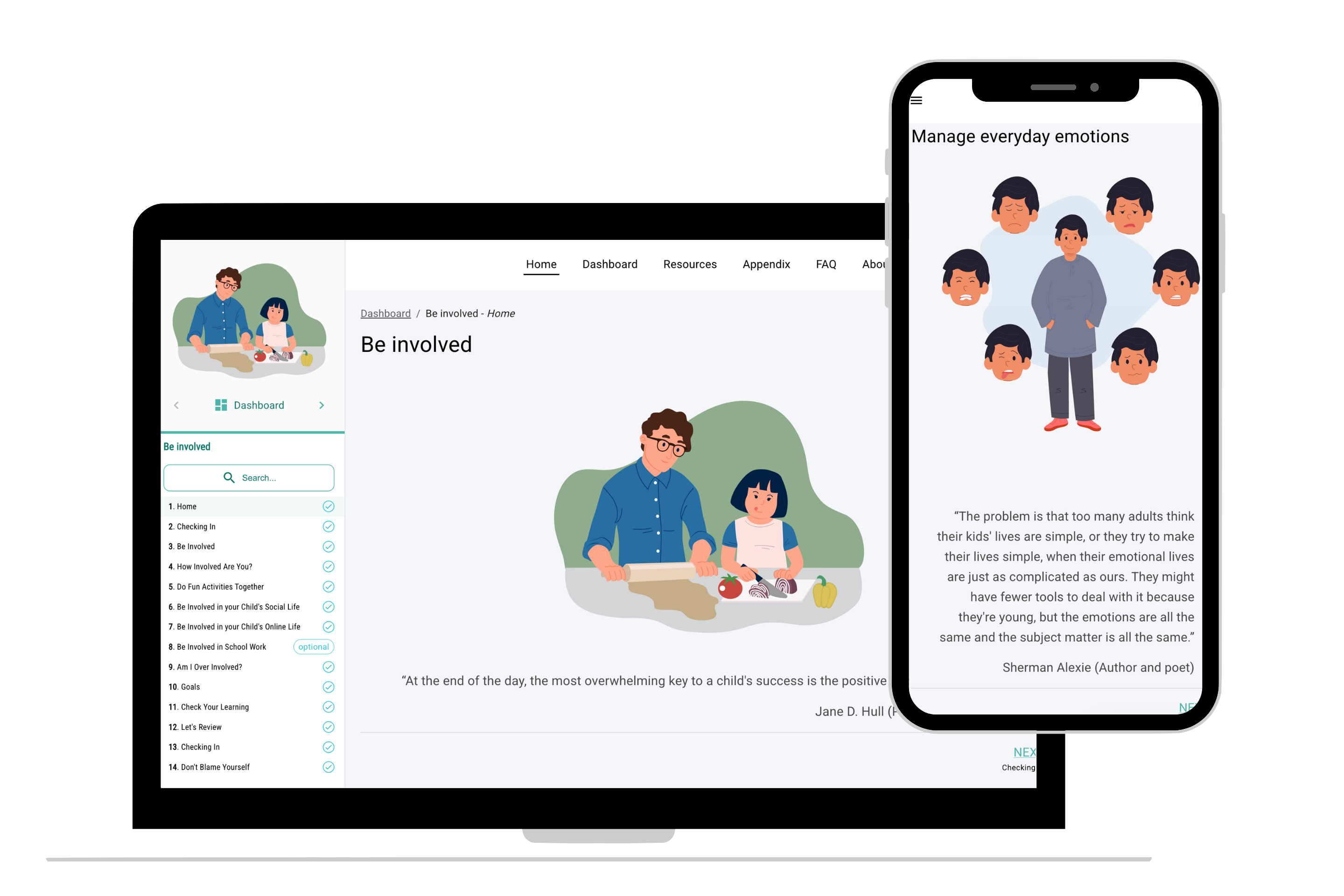
  • Both desktop and mobile versions available
Fun and interactive
  • Learn practical strategies through interactive activities, podcasts, and video-based scenarios
  • Apply your module learnings through weekly goals
Free to join
Joining PiP Kids won’t cost you a cent!
Interactive

Powered by Induk, an Open Source platform.

PiP Kids content is Creative Commons BY-SA 4.0.